
THINKING TOOL
Think clearly about the problem before you design the solution
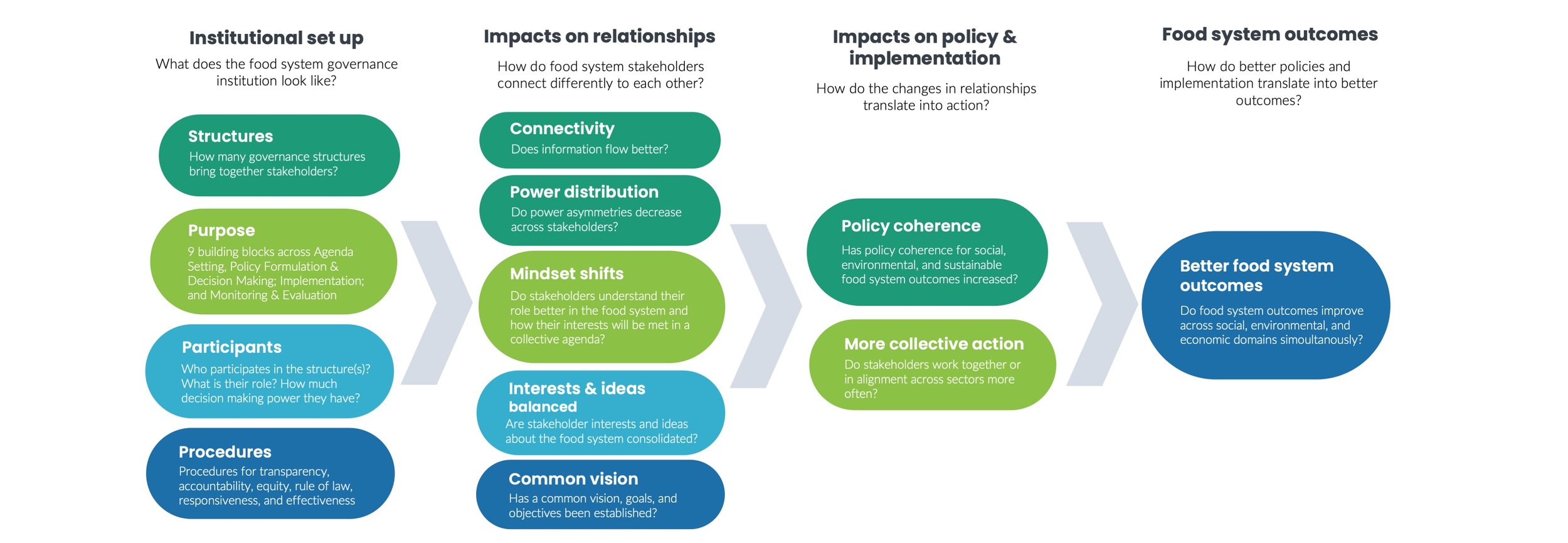
Before designing or strengthening a food system governance institution, it helps to think clearly about the problem you are trying to solve. The Thinking Tool is a workshop companion for policymakers, government officials, researchers, and civil society. Rather than scoring or auditing an institution, it guides a group along the pathway by which governance creates change — from set-up, to relationships, to policies and implementation, and ultimately to food system outcomes.
How to use it
The Thinking Tool is built for a workshop setting. It offers a series of questions to spark discussion across four pillars that follow the pathway through which a governance institution creates change: from how it is set up, to how it reshapes relationships, to how those relationships translate into policies and implementation, and ultimately into food system outcomes.
Before you begin, agree on the institution you will focus on: usually the main whole-of-government body that coordinates food system policy in your country. Where members see things differently, treat that as useful information; it often reveals the gap between how an institution is designed and how it actually works.
A few principles for the discussion: There are no right or wrong answers. Work through the pillars in order, as each builds on the one before. Draw on your own experience and evidence. Where members of the group see things differently, treat that difference as useful information — it often reveals the gap between how an institution is designed and how it actually works.
Continue exploring the Framework and its Toolkit
Theory of Change · Global Map & Typology · Assessment Tools · Quick Diagnostic Tool · Case Studies & Lessons · Guidance for Development Partners