
ASSESSMENT TOOLS
Is your governance institution working? Two tools to find out
A growing number of governments now have a whole-of-food system governance institution steering food system policy. Far fewer can say, on the evidence, whether it is working — whether it is shifting how actors engage, aligning policy across sectors, and where it most needs strengthening. The Assessment Tools answer that question.
The Framework offers two options — the Rapid and the Extended Assessment Tools — calibrated to different resource environments and depths of analysis. Both read an institution across the same three stages: how it is set up, how it is performing, and whether that is translating into more coherent policy and collective action. Because they share one logic and indicator set, a country can begin with the Rapid Tool and move to the Extended one as needs and capacity allow.
What the tools measure
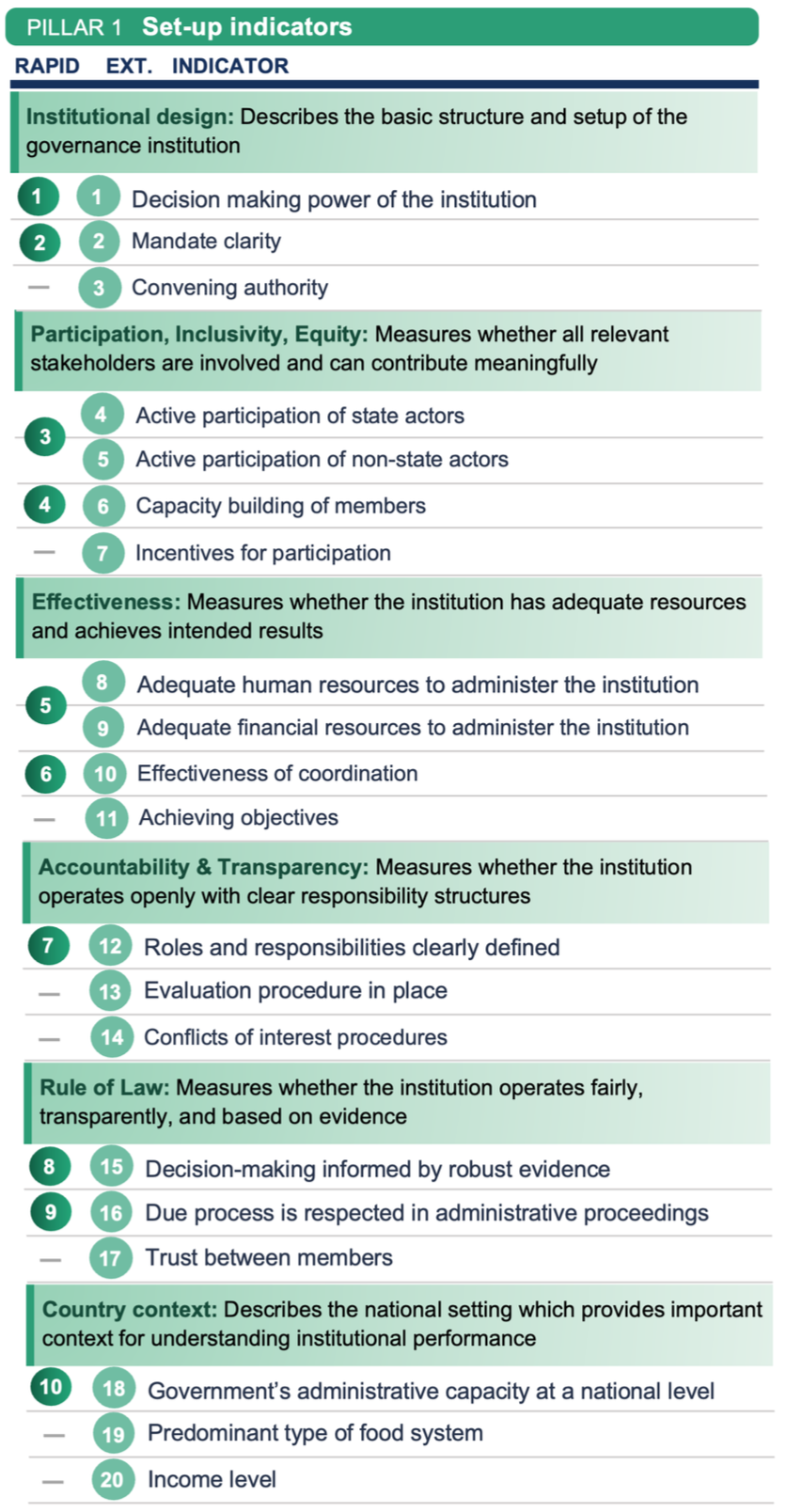
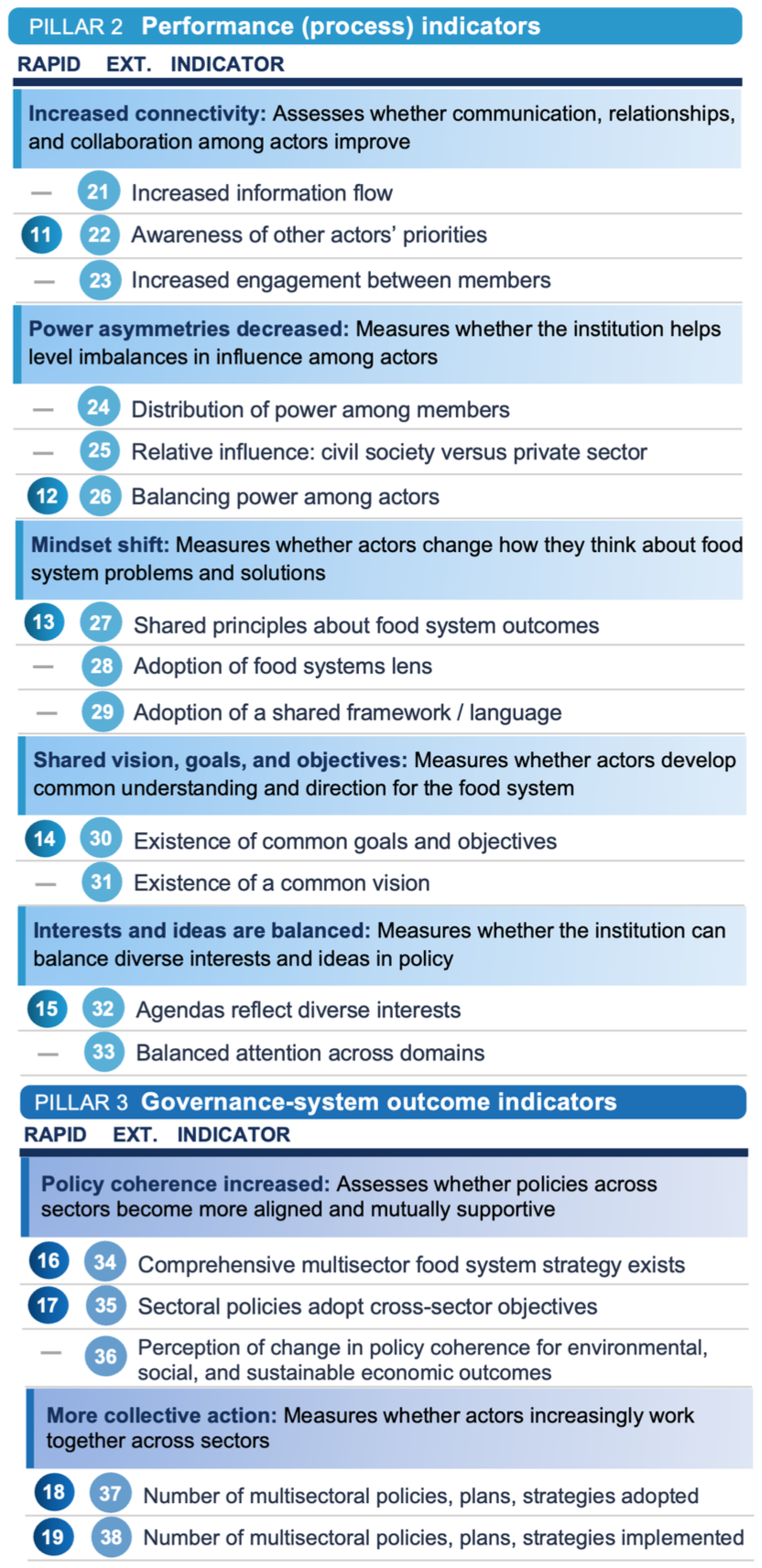
Both tools follow the Framework's theory of change, across 13 governance dimensions:
Set-up (inputs): institutional design; participation, inclusivity & equity; effectiveness; accountability & transparency; rule of law; and country context.
Performance (process): increased connectivity; reduced power asymmetries; mindset shift; shared vision, goals & objectives; and balanced interests & ideas.
Governance-system outcomes: increased policy coherence; and more collective action.
This keeps the focus on what can credibly be assessed — an institution's set-up, performance, and governance-system outcomes — rather than claiming credit for food system outcomes shaped by many other factors.
How the assessment works
Both tools combine two complementary sources of evidence, so an institution's design can be compared with how it functions in practice.
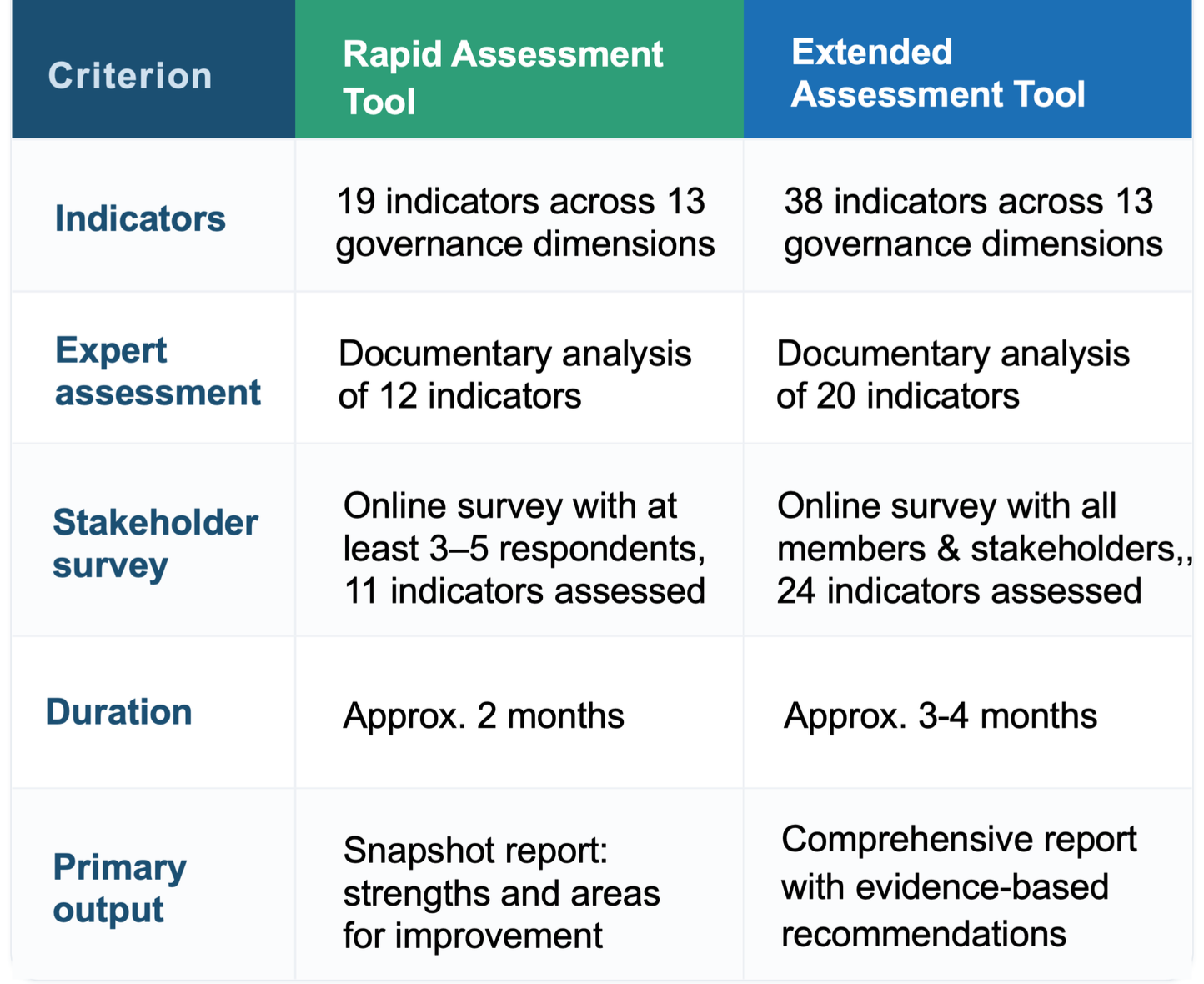
An expert documentary assessment sees a governance expert with knowledge of the country context review institutional documents (e.g., terms of reference, founding legislation, meeting records, strategic plans) and score each applicable indicator against a structured rubric with defined levels and an evidence checklist.
A stakeholder survey captures the lived experience of institutional members: perceptions of performance, connectivity, power dynamics, and how far the institution has changed the way food systems are governed. The Rapid Tool draws on at least 3–5 strategically selected respondents; the Extended Tool invites all members and stakeholders.
An assessment works best with the institution's active engagement, and asks the participating government three things: access to institutional documents; help reaching the right people to distribute the stakeholder survey; and engagement with the findings through a results consultation, where the institution can test and take ownership of what the assessment reveals.
What the assessment delivers
Each assessment produces a confidential report prepared for the institution, with findings and recommendations owned by the assessed government. It identifies strengths alongside areas for improvement, grounded in both documentary evidence and stakeholder perspectives. The Extended report opens with an executive summary, sets out its methodology, and prioritises recommendations across two horizons: quick wins within the first year, and longer-term strategic shifts. The Rapid report offers a streamlined version of this report.
The tools are improvement-oriented: rather than ranking or auditing institutions, they help governments understand what is working, what can be strengthened, and how to prioritise. All findings remain confidential and government-owned; the institution decides what, if anything, is shared publicly.
Which tool, when?
The Rapid Assessment Tool suits a first read, a resource-constrained setting, or a regular check on progress. It can be completed in about two months, from preparations to drafting the report, and can be repeated annually. The Extended Assessment Tool suits an in-depth diagnosis — from demonstrating impact and meeting accountability needs to identifying specific priorities for reform — on a longer cycle of every three to five years, and takes about three to four months. Because both rest on one logic and indicator set, a country can begin with the Rapid Tool and move to the Extended one without redoing the groundwork.
How the tools were developed
The Assessment Tools are the product of a structured, multi-step co-design process: a scoping review of existing governance evaluation frameworks; a two-round Delphi consultation with more than 70 policy practitioners from over 40 countries as future end-users; and pilots in six countries — Brazil, Cambodia, Somalia, Timor-Leste, Yemen, and Zambia — chosen to test the tools across very different settings. An International Advisory Group of governance and food systems experts guided the work throughout.
Continue exploring the Framework and its Toolkit
Theory of Change · Global Map & Typology · Thinking Tool · Quick Diagnostic Tool · Case Studies & Lessons · Guidance for Development Partners