
THE TOOLKIT
A set of complementary components, grounded in a shared theory of change
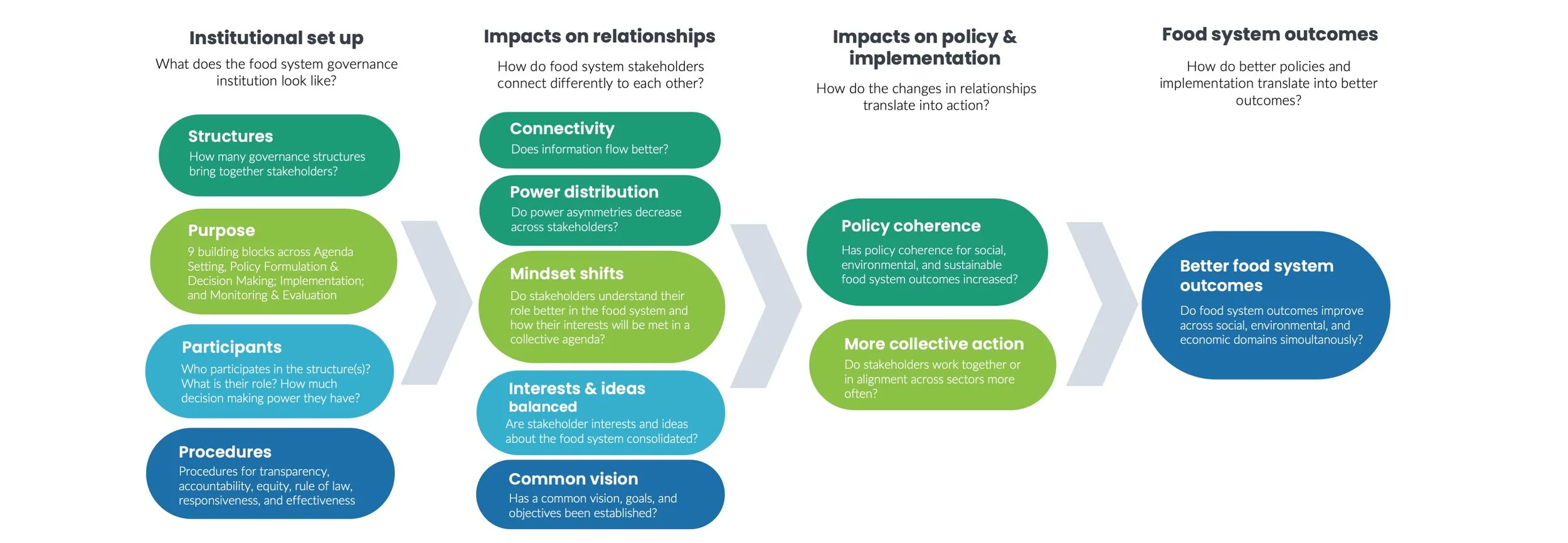
The Framework sets out how a whole-of-food system governance institution creates change.
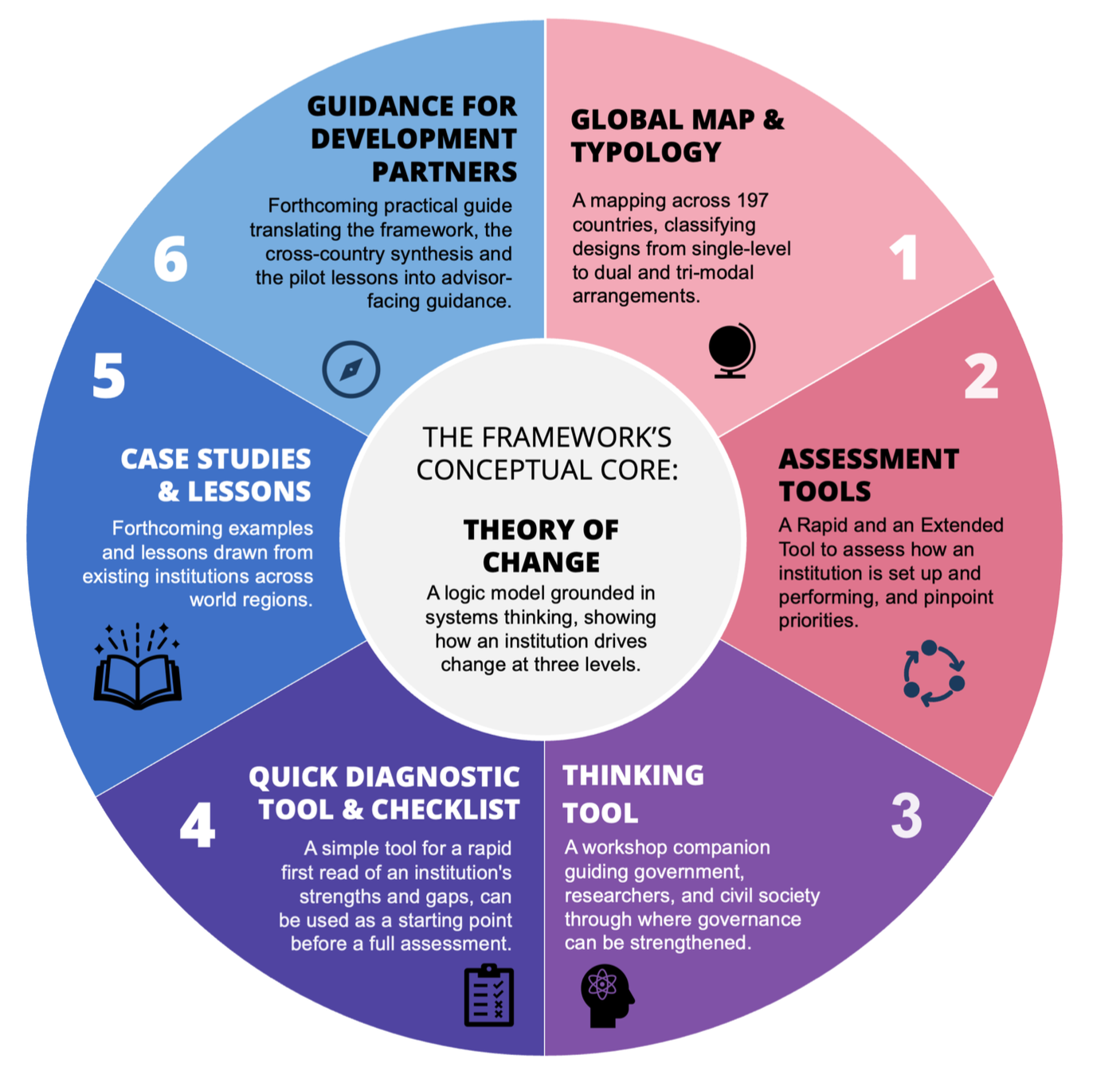
Its Toolkit turns that thinking into practice. Grounded in a shared Theory of Change — the Framework's conceptual core — the Toolkit brings together six complementary components. A government can use them as an integrated package or reach for a single one, starting wherever its need is greatest and building from there.
Explore the Toolkit
Global Map and Typology
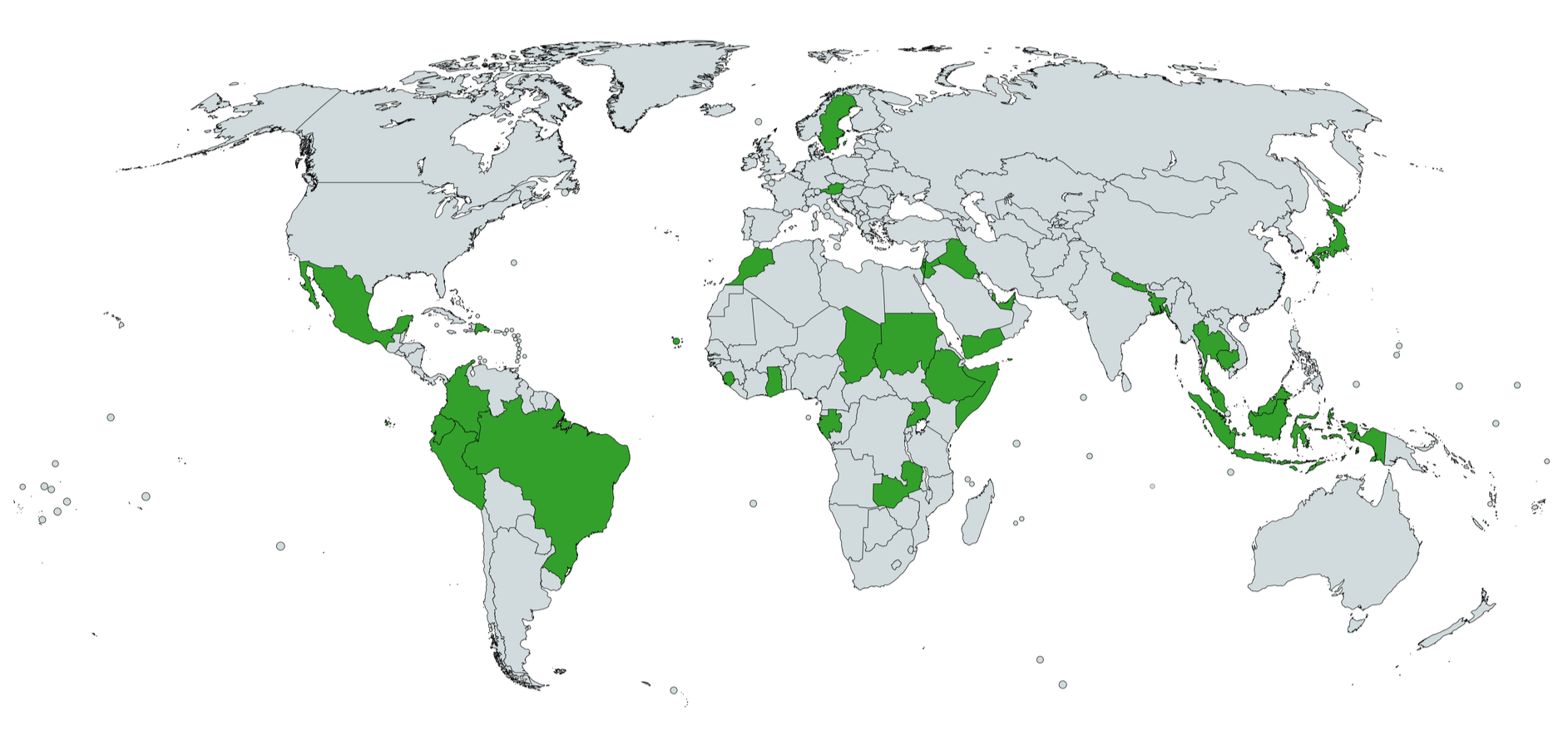
A mapping of whole-of-government and whole-of-food system governance institutions across 197 countries, classifying the designs in use from single-level to dual and tri-modal arrangements. This component enables countries to situate their own institutional arrangements within the broader global landscape and to explore the full range of design options adopted in different contexts.
Assessment Tools
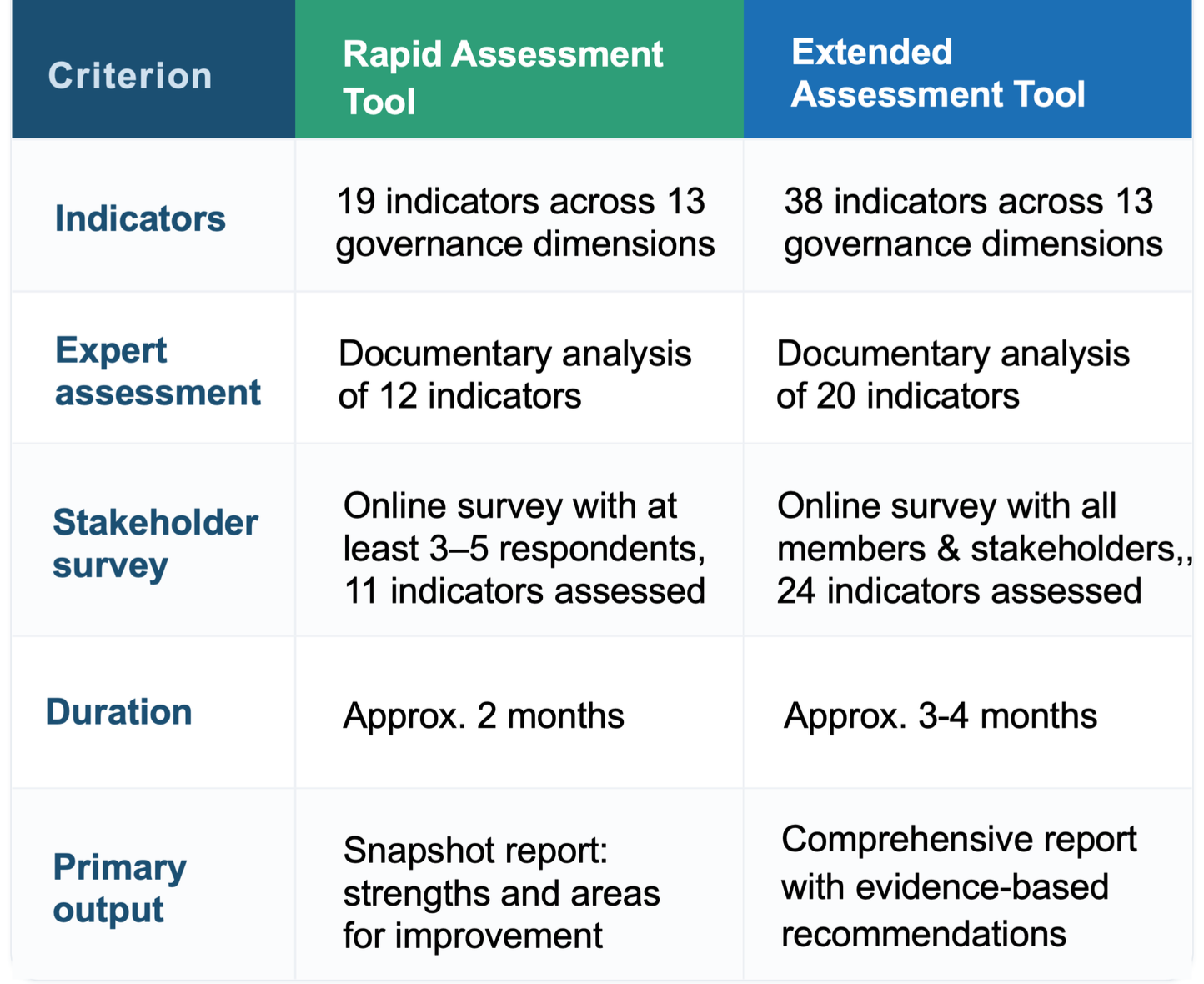
Two internal learning and development tools to understand the strengths of existing multisectoral food system governance institutions, and identifying opportunities improvement with a strength-based approach. We developed a Rapid and an Extended Assessment Tool, to be chosen depending on the time and resources available.
Thinking Tool
A workshop companion that guides government officials, researchers, and civil society through four pillars of reflection. Its aim is not to score or audit but to spark a shared, structured conversation about how a food system is governed and how it could be strengthened in a country's own context, often bringing to light the differences between how an institution is designed on paper and how it works in practice.
Quick Diagnostic Tool and Checklist
A short, self-contained checklist for a rapid first read of an institution's strengths and gaps, usable on its own when a full assessment is not needed or as a starting point before one.
Case Studies and Lessons
Practical examples and lessons drawn from institutions in different contexts.
Guidance for Development Partners
Practical guidance for donors, UN agencies, regional agencies, and other development partners on how to support multisectoral food system governance institutions effectively.
How the components fit together
The Framework supports two tasks: strengthening an institution that already exists, and designing a new one.
To strengthen an existing institution, a government can begin with the Thinking Tool to build shared understanding, use the Quick Diagnostic Tool for a fast first read, then apply the Rapid or Extended Assessment Tool for an evidence-based reading of how the institution is set up and performing. Together these pinpoint a small number of concrete priorities — naming specific actors and actions.
To design a new institution, the Global Map & Typology sets out the designs other countries have adopted, and the Theory of Change clarifies what a new institution needs to do to create change. Rather than importing a template, a government can assemble an institution from the functions that fit its own context, capacity, and priorities.